An AI-induced wave of disruption is tearing through Australia’s white-collar workforce, and not everyone has been lucky enough to get ahead of it like Rakeen.
Most of the casualties have been in tech, which University of Sydney Business School Professor Clinton Free says demonstrates the case that “yesterday’s growth occupations are not automatically tomorrow’s safe occupations”.
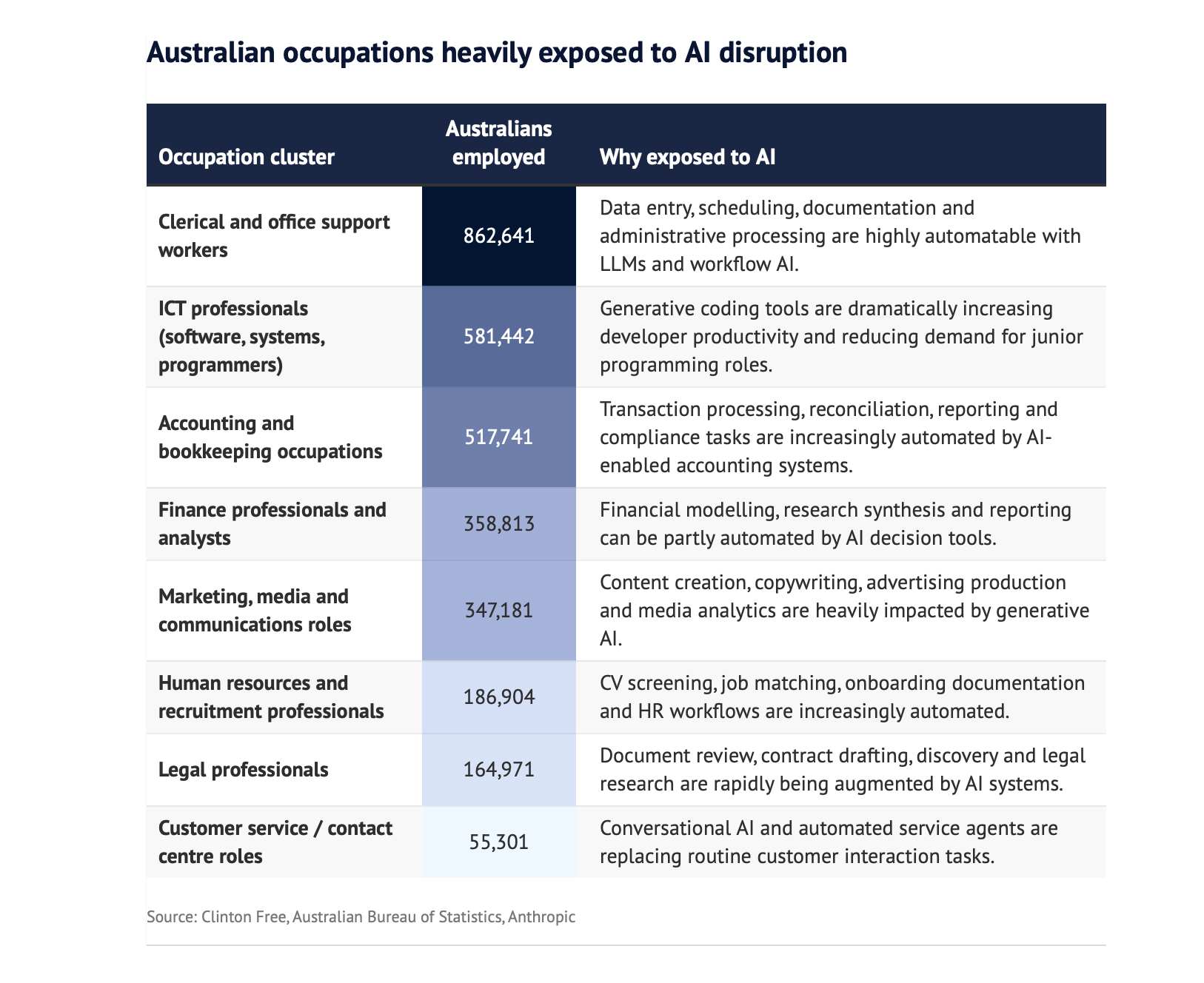
Technology-related roles were among the fastest-growing occupations in Australia from November 2020 to November 2025, and are, according to a report published by American artificial intelligence company Anthropic earlier this month, among the top occupations heavily exposed to AI disruption.
The scope of this disruption is, currently, something we will only be able to understand in hindsight. As Free puts it: “The technology is moving faster than the official labour statistics.”
“We’re still very much in the early stages of this transformation,” Indeed Australia senior economist Callam Pickering echoes. “A lot of what we say about AI is speculative.”
Teachers, tradies, aged care and healthcare roles are among the top occupations projected to grow by 2050, as are cleaners and hospitality workers.
But according to data from the Australian Bureau of Statistics, the latter two were among the top 10 fastest-shrinking occupations between November 2024 and November 2025.
“We don’t truly know how this is going to play out,” adds Pickering. How can we ask future white-collar workers to choose which career path to follow in this uncertainty?
Dr Janine Dixon, who is the director of the Centre of Policy Studies at Victoria University, helped model the labour market impact of generative AI for Jobs and Skills Australia.
The final report, released in September, showed there was “absolutely no occupation that was completely immune from AI”.
University graduates that will be more in demand for employers, careers consultant Helen Green says, are those who can demonstrate they are embracing technology.
Last year Green, who is the director of Melbourne firm Career Confident, noticed year 12 students and parents were concerned about the impact of AI on their employment opportunities, particularly as the cost of tertiary qualifications rises.